Showing posts with label Yoga Methodology. Show all posts

Monday, March 2, 2015

Top 7 Reasons to Do a Yoga Teacher Training at WLYA in Thailand


Picking a place for your Yoga Teacher Training can be challenging.  You start asking around, researching online, comparing prices, and poring over the details.  Hundreds of aspiring practitioners have ventured to Wise Living Yoga Academy in Doi Saket, Thailand for their Yoga Teacher Training Course..  Let’s take a look at why!

1. Immersive experience


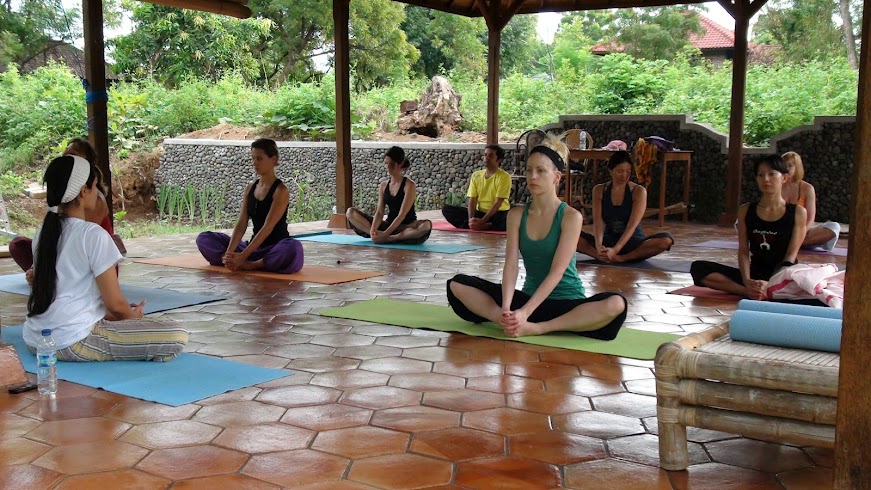
The Yoga Teacher Training Course at WLYA is all about yoga education and lifestyle.  You live in an ashram environment with teachers and other students sharing your interests. You live and breathe and observe the yogic lifestyle every day for the entire duration of your training.  The environment really allows you to develop a solid routine comprised of a good diet, exercise, and meditation, among other things.

2. Traditional yoga


So many people think of yoga only as a form of physical exercise, and so many yoga teacher training programs cater to that idea.  But what about its root and history?  The vast spiritual, mental, and emotional aspects of yoga?  Yoga as a lifestyle?

WLYA is perfect for those interested in understanding how yoga is as a way of life. You are introduced to yoga as one of the ancient Indian philosophies and study important scriptures. The comprehensive curriculum is led by experienced teachers from the world’s oldest organized yoga institution in India.  You practice asanas (physical postures) and other techniques at a deeper level and learn how they contribute to one’s spiritual development.  You will find yourself shaping into a wonderful practitioner, educator, and ambassador of traditional yoga!

Follow the link to know more about our Yoga Training curriculum.

3. Affordability


Yoga teacher training is a significant financial investment for most of us.  At WLYA, you will find that the facilities are pleasant and simplistic without sacrificing comfort.  It is a very down-to-earth place with no frills.  You do not see products and services being marketed at every turn.  Likewise, the program costs have been made more affordable, especially compared to yoga centers that push for brand names and luxury.

The ashram is located away from the tourist central, and it costs less to do things around here.  You can rent a bike for less than 1 USD a day, treat yourself to a coconut that tastes like a slice of heaven, and then get an authentic Thai massage at a rate that almost makes it feel insensible to deny yourself of a good rubdown!

4. Location


Students have described the ashram and the surrounding area as the perfect place to study traditional yoga.  The ashram is tucked away in the neighborhood of Doi Saket in northern Thailand.  With few distractions around, you will be able to really soak in the ashram environment!  At the same time, there are great temples and places within reach if you want to venture out.  It is also a great stepping stone for travels before and/or after the yoga teacher training program.


5. Food


Part of living the yogic lifestyle means eating a vegetarian/vegan diet.  You have three nutritious meals a day made from scratch, along with fresh fruits and natural tea.  The food at the ashram is so delicious that students don’t miss meat, cheese, or junk food!  The ingredients are 100% organic and come from either the ashram’s gardens or conscientious local farmers.  Through an interactive nutrition session, you learn about the benefits and uses of all the ingredients as well.

6. People, people, people

Trained at The Yoga Institute in India, the teachers Jeenal and Daniel are very active and passionate about imparting their practice of traditional yoga.  They help you discover your strengths and weaknesses as you go through your journey, and are very flexible and accommodating to individual needs.  The ashram workers are locals who are incredibly generous and positive.  You will find them around the ashram smiling and putting in hard work to make your stay an enjoyable one.

At WLYA, you will meet students from all over the world and from different walks of life.  They have in common their interest in traditional yoga and spiritual development.  This tends to draw very genuine people, and the teachings shape the group dynamic in very positive ways. By the end of first week, the group will already feel like a family! 

7. Alumni network and support


The connections made at the ashram are invaluable and so are the networking opportunities.  WLYA has an active alumni group where former students share news and inspirations from around the globe.  This way, you are not just walking away with a certificate in hand, but you have a strong support network to pursue your next steps.

Several students also return for Continuing Education programs which are offered in modules of 100 hours (2 weeks) or as the 300 hours Advanced Yoga Teacher Training course (6 weeks). 

To sum it up, WLYA is an incredible place for those seeking a meaningful yoga teacher training experience.  Be prepared to work hard and learn so much about yourself and the world, and you will be richly rewarded.  Please check out our upcoming Yoga Teacher Training Courses in Thailand and reserve your place.

Namaste,
WLYA Team

Sunday, September 29, 2013

Yoga Education - Part 2

How does one select the right type of Asanas?

The Yogi borrowed heavily from Nature because of his proximity to forests, mountains and caves. However he was judicious in his selection. He preferred to learn from the relaxed crocodile rather than from the rabbit or the inquisitive dog (although these postures are there in Yoga nowadays). He imitated certain birds, animals and natural objects. The selection of  postures (Asanas) was based on an overall approach to the physical, mental and moral well-being of an individual.

Methods

The Asana practices were carried on for a longer duration. This provided a chance for prolonged mental participation, synchronization and direction. Thinking precedes action and unless the mind is well under control, merely developing the body may later weaken it. The Yogis therefore took into account the psychological aspect of our personalities. The well-known physiologist Matveyev said: “The Yogis demonstrate pronounced endeavour to consciously direct the activity of certain organs, even of certain glands and internal secretions and maintain that they scored along the line.

Right and Wrong Directions

Talasana or Palm Tree Pose
(focus on the synchronization of
breath and movement)
With the practice of the third step, the Asanas, we overcome unsteadiness, inertia and other impurities. We might even perfect the steadfastness (Siddhi) that involves the mind even further (Samapatti) but this is an exception. We must not aim at too many things at the start.  In fact, each step of the Eight-fold Path (Ashtanga) has only a certain strength to impart.

All that we should concern ourselves with, during the Asana practice, is imparting a wider meaning to our activity. The act of breathing is a good aid in holding our attention. Also directing our mind to different parts of the body. Synchronization of breathing with movements of the body during the practice of Asana in a fixed measure was introduced by Shri Yogendraji in 1917 and is now popular among many Yoga teachers and schools.

There is, in fact, much to learn from Asanas.  However, a practitioner must possess:

(i) a strong commitment,
(ii) a disciplined mind,
(iii) introversion and tranquility when one begins the Asana practice, and
(iv) synchronization of breathing.

If one has achieved the above conditions, one will succeed in uplifting one’s thoughts to a higher level of consciousness.

Steadiness

We have just discussed that steadiness is vital to the performance of an Asana. How do we achieve this steadiness? Secure the feet correctly, sit upright, have a good base (Sthirata), avoid hurry, agitation and speed. Cultivate solemnity, commitment, decisiveness, etc. To remain for a certain length of time without agitation is in itself an achievement.

The next step is the achievement of relaxation while carrying out conscious movements. You will ultimately reach a state of profundity or the so called “let go” sensation. Full composure and control is necessary. One must not collapse into a final position. One must consciously seek out areas of relaxation – some sensitive zones in the body.

Matsyasana or Fish Pose
(focus on relaxation through awareness of
the movements of the abdomen while breathing)

Relaxation

The state of relaxation is very valuable in therapy. Coordinated breathing aids in bringing the mind to this state. Otherwise, the chances are that the mind strays away from the Asana into other areas. You must lead your mind to areas such as the abdomen in Matsyasana (Fish Pose) and create the sensation of “let go”, or the chest in Talasana (Palm Tree Pose). This directing of attention and concentration on breathing will achieve a good deal of relaxation. These poses are many other Yogic techniques are very well examined during our Yoga Certification Course in Thailand.

When one works systematically one experiences a change in one’s thoughts, behavior, action etc. Usually these conditions come in a flash and are lost. There are usually so many external distractions and constraints that restrain a person from achieving relaxation.  In Yogic Asanas you are with yourself and can perfect these attitudes by self-training. In the end you can achieve a perennial state of stability (Ananta Samapatti). 

The postures you do every day need not be very difficult, but your attitude while doing the postures must be sustained. You should thus understand the deeper significance of the Yoga postural training: steadiness (Sthira) and contemplation on fixity (Anantasamapattibhyam).

Photos: taken on location - The Yoga Institute of Santacruz, India. Daniel Fonseca performs two simple, but effective, postures advocated by Shri Yogendraji for a daily course of Yoga postural training.

Source:
Excerpts of the book Yoga and Total Health in Schools - published by The Yoga Institute of Santacruz.

Friday, September 20, 2013

Yoga Education - Part 1

The ultimate purpose of pedagogy, the science of teaching, is the attainment of human maturity.  It is this that distinguishes this art from other disciplines, distinctly defining it in its own essence.  Maturity is obtained by different traditions of education all over the world.  Nowhere does it achieve greater results though, than, when the education process itself is studied objectively devoid of dogma.

Yoga, it has been established, has very specific educational functions.  It helps in achieving a higher state of consciousness on the evolutionary scale of individual development.  It is the discipline of the body and mind and in that sense it is education, because education leads to discipline.

Yoga a Science of Life

Yoga is as old as life itself.  In essence it is a specific way, a manner of living.  Basing its insights and discoveries on the observation of nature, Yoga imparts a certain quality to life.  Yoga, for example, tells us how to think, behave and grow to our fullest maturity.  It provides us with procedures that consistently help us in every area of our life.  Yoga can, thus, be defined as an ancient system of self-development that expedites one’s natural process of evolution.  This applies to all departments of one’s life with a special reference to the evolution of consciousness.

Experience & Yoga Education

Experience has proven to be the primary building block of learning.  The closeness of an experience to the personality helps in building newer traits.  These take root as against other kinds of learning that remain detached from the central core of our personality.  A deep sense of relaxation is consciously cultivated and this, in turn, fosters other worthwhile experiences.  What is stressed is the actual experience - as opposed to mere information or technique.  One may read about relaxation or listen to a physician’s instruction, but the condition remains distant in comparison to the actual experience, consciously induced.

Aims & Objectives

The aim behind the introduction of an experience-Yoga-based program is to foster self discipline, cultivate high ideals and appreciate higher values.  It also promotes a deeper understanding of Indian culture and a habituation to the Yogic way of life.  A variety of worthwhile experiences become the basis of learning at both the subconscious and conscious levels.  Some of these are related to better physical control of human organism and the maintenance of its steadiness and strength.  It establishes self-reliance, self- confidence; the cultivation of objectivity in emotional experiences and finally conditions oneself for greater receptiveness in the learning program.

All problems originate from a state of imbalance between our physical, mental and spiritual levels.  Our problems are closely related to our understanding of life and the patterns we choose to follow.  The more we cherish materialistic values, the more we expose ourselves to pain, suffering and problems.  The struggle for the satisfaction of our desires and ambitions is a continuous one, leaving us with no rest.  Our constantly over strained nerves make our bodies and minds restless and weak, opening doors to passion and emotion.

Perhaps the very first step towards a more fulfilling life would be, simply, the acceptance of life itself.  It involves a faith in life, but perhaps even more important, a surrender to a larger reality.  This acceptance does not imply a placid acquiescence of any aspects of modern living.  On the contrary with acceptance of life comes the acceptance of our duties and responsibilities in life.

Excerpt of a poster displayed at an exposition on Yoga Education, by
The Yoga Institute of Santacruz, Mumbai - India.

Activity & Attitude

The traditionalists in Yoga recommended the right combination feelings and attitudes with certain selected physical activities.  The physical activity is undoubtedly selected after deep consideration.  It proves incomplete without the proper attitude.  If the activity is the right kind and the attitude enriches one’s consciousness, then the entire exercise – is satisfying and elevating.

We see the reverse of this when a person struggles to succeed in Shavasana (Dead Body Pose) - or any other relaxation posture, or in a meditative pose - without having first created a passive attitude.  It is thus that, throughout the Yoga Teacher Training Course or any other workshop or workshop, activities and processes are carried out only after a certain 'conditioning' of preparation has been achieved.

The selection of Yoga processes and the correct performance of them along with the right state of mind all need to be attained.  We tend to sacrifice that total for the immediate and fragmentary.  Sometimes Yoga practices are carried out for their demonstrative value and at other times for attaining physical fitness.  In taking up Yoga in this partial manner one really does not gain much.

So in our next post, we will have an opportunity to examine how does one select the right type of asanas (postural training), or better saying, how do the ancient Yogis have selected the right type of exercising disciplines best suited for the students of self-culture and for naturally leading one to a more balance state of mind and to the habituation to a spiritual consciousness.

Source:
Excerpts of the book Yoga and Total Health in Schools - published by The Yoga Institute of Santacruz.

Monday, March 4, 2013

Yoga At Work

Besides conducting Yoga Teacher Training Courses in various parts of the world, we have long time ago introduced Corporate Yoga Training programs in India, and it has been a great experience.

We have introduced new methodology of training the employees by integrating modern activities and the concept of Multiple Intelligence and Experiential Learning.

These activities have been developed by The Yoga Institute of Santacruz and tested with thousand of students. They are used for bringing about more body awareness and control, concentration, relaxation and make it easier the understanding of the Yoga Philosophy – through conceptual games. All that, of course, along with traditional yoga asanas, pranayamas, kriyas and meditation.

Our aim is to use all this technology to give a broader perspective to physical and mental fitness, taking in consideration of the modern day set-up of an office environment and functioning.

Read more and go through the pictures below to understand how it works:

Kinesthetic Intelligence
Learning through movement and control of body. Developing better motor skills and neuro-muscular co-ordination. We have been using games and juggling with rubber balls which has show tremendous positive effect besides being a recreational activity.


Traditional Training with Yoga Asanas
The practice of asanas is the traditional method of improving body awareness and dexterity.


Training employees with Multiple Intelligence Techniques is a very practical exercise that promotes efficiency, decision power and harmonious inter-relations with other workers. It is shown highly beneficial for the progress of an organization.

Keep in touch to know more !!!
Namaskar !!!

Tuesday, February 26, 2013

Karma Yoga - Work with the right attitude

The emphasis is on the attitude and on consciousness. Maintaining a certain attitude constantly leads to a corresponding awareness which again leads to being established in this awareness at the time. That is why being involved in work is qualified by the statement “a right attitude”.

Work by itself is not what is suggested. To turn this work into worship will require change in the attitude. The usual suggestions here are faith, duty, service and concentration.

This immediately puts the mind in a different state. There is a worshipful attitude, dedication and much spiritual gain. In fact one who has reached such state and remains all the time in this state can very well claim the highest achievement for himself, i.e., self-actualization.

Do it - Why do we go on talking about right and wrong; good and evil? Newton talking about his work said it is 1% inspiration and 99% perspiration. Those who talk of right or wrong spend 99% in talking and 1% implementing. The Gita wants us to work 100% in the spirit of KARMA YOGA.

(This explanation above was a talk given by Smt. Hansaji (our Guru) in the Satsang (Spiritual gathering) at The Yoga Institute, Santacruz, India.)

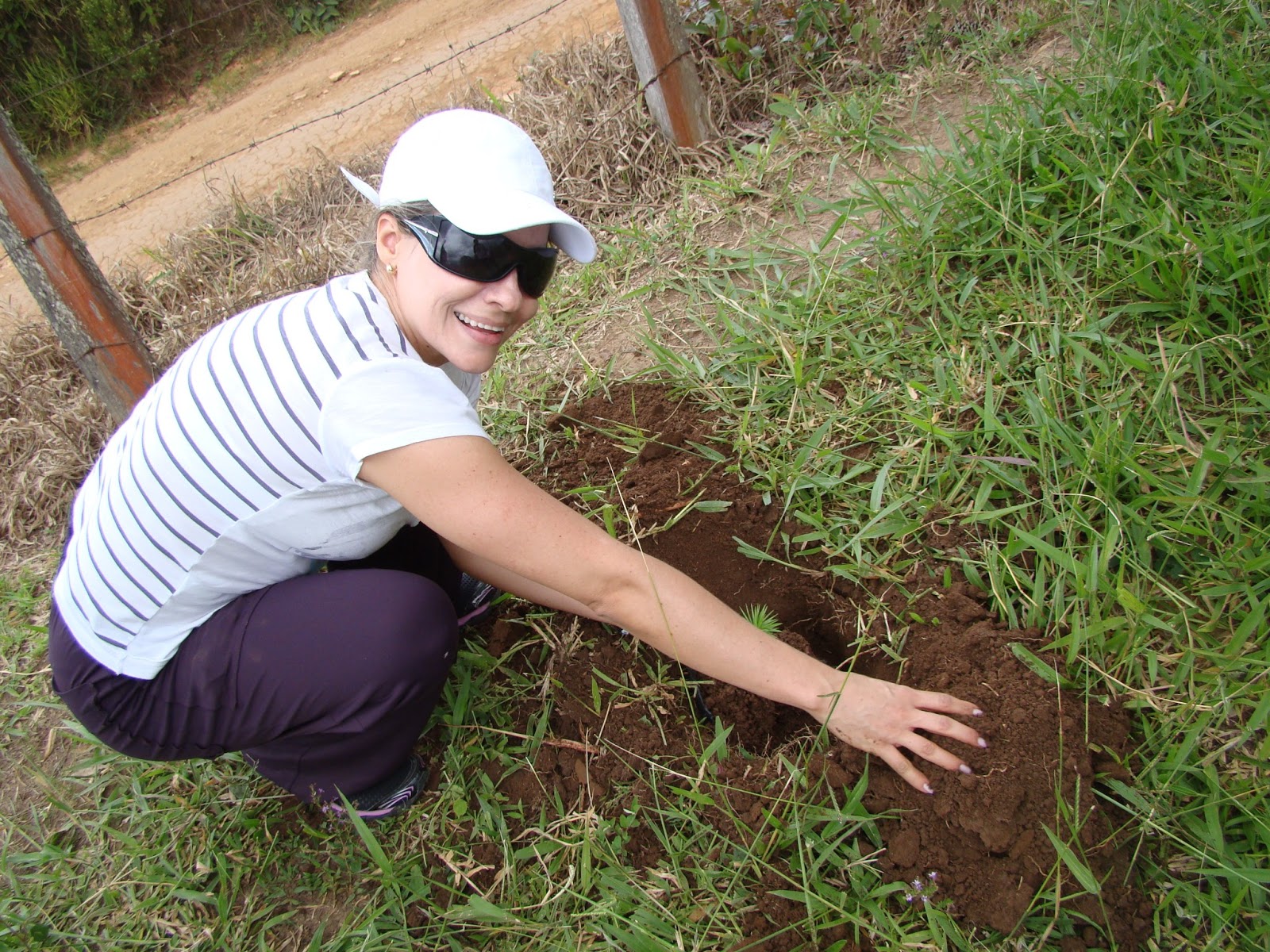
Students working together with the spirit of Karma Yoga

In our Yoga Teacher Training Courses held in Thailand, Brazil and Bali we lay much importance on training  the students on the path of Karma Yoga. Especially the old students in our 300 hr Yoga Teacher Training Course get to learn in depth about this path by performing assigned tasks and duties with correct attitude (Bhavas) and with balanced state of mind. It is a valid path that can help a Yoga aspirant in his/her daily life by bringing a sense of joy, balance and content even in the ups and downs of life. It relieves a person from insecurity, stress, anxiety and depression. 

Ana digging a hole for planting a sapling

Students planting tree saplings

Karma Yoga during Yoga Teacher Training - Brazil

--/--

Wise Living Yoga Academy is authorized to impart Yoga Teacher Training Courses on the tradition of The Yoga Institute of Santacruz in Mumbai, India – the world’s oldest organized Yoga Institution. The residential programs are held regularly in Bali (Indonesia), Chiang Mai (Thailand) & Minas Gerais (Brazil) throughout the year and are accredited by the Yoga Alliance USA, allowing the graduates to teach Yoga in any part of the world.

The 200 hours courses and the Advanced 300 & 500 hours Yoga Teacher Training Courses are conducted regularly in our new permanent Yoga Center in Doi Saket, Chiang Mai, Thailand.

Please follow the links to know more about all the scheduled
Yoga Teacher Training Courses (YTTC)  in 2013:


Sunday, February 10, 2013

Yoga Teacher Training in Brazil/Brasil

Dear Yoga friends,

It is the 20th day of our Yoga Teacher Training Course, here in the lush green mountains of Brazil/Brasil. And everyday is a long day filled with mental and physical yoga techniques. The students are going through a deep transformation at all the levels of their personality. It is a profound experience, living here up on the mountains, meditating and practicing, listening to philosophy and eating a healthy diet. It is a wonderful challenge, to bring a powerful and long lasting change. And it is in process :-)

From left to right: Jeenal, Cindy, Alice, Maria, Karine, Mariana, Damian & Daniel
Sitting: Luciana, Marli and Ana

All the participants have finished with their Yoga lesson plans and presentations. They have also experienced taking a 20 mins yogic relaxation class. Yesterday, Damian was the last but not the least to conduct his class on relaxation techniques. His words flowed like a soothing river, with so much serenity, with many colors and emotions, and everyone felt at ease. When a students find solace and satisfaction in sharing their deep expressions of the very essence of their being, I feel so much at peace and my trust and love in spreading this higher education of life grows even more. I felt gratitude, and I asked him "Do you feel content?"

It is a nice feeling, of peace, of kindness, when we know that we can be of help to someone. When we can make others smile, when we can uplift someones life. And this is YOGA!

Damian concluded the class with a sweet poem on Yoga, which I would like to share here:

Blossoming -
by Janet Arnold-Grych from The Poetry of Yoga Volume 2 (page 41)

In the beginning,
With each unraveling of the mat,
We are anxious to add to our garden,
To gather the beautiful buds,
And coax each asana to open quickly.
Feet in the dirt we stand,
Sometimes for the first time,
Connecting earth to muscle and muscle to sky,
The energy of an immense lineage
Pulsing with promise.
But as the poses settle,
As we settle,
We find that yoga’s true gift is not about more
But less.
The outline of the poses remain the same.
Yet when the space between is fed,
When ease replaces expectation,
When patience replaces petals,
We find that the asanas are no longer
About holding on,
But letting go.
And in that release,
Without judgment or force to impede,
Breath floods in,
Releasing the mind and freeing the heart.
Through yoga,
We find
That core of serene nothingness,
And learn that in letting go,
We gain everything.

What a beautiful poem, indeed! Isn't it?

We wish all our students the very best for their Yoga exam which is coming soon. But life itself is a test, and our best wishes will always remain with them. All our students are so special for us. Thank you so much everyone of you!

Namaste! OM Shanti!
Jeenal

Tuesday, September 11, 2012

Yogic Relaxation - Shavasana for Stress Management.

"A significant number young adults are showing adverse effects of stress on their physical and mental health that result in emotional disturbances, faulty eating habits and overall lifestyle disorders. Long term stress is also the cause of several diseases along with personal and family problems."

Yogic techniques for relaxation are very practical techniques to restore balance and rejuvenate the body and mind. Shavasana which is a conscious relaxation technique which is done by relaxing each and every body part, one by one, and it can be done in a time span of 20 to 40 minutes.

There are so many stressful moments that we have to face daily. Catching a flight, taking an important decision, managing the finance and with such other responsibility we often feel drained and dry. Along with these wrong eating habits, inadequate rest, faulty time management, lack of physical exercise can enhance the stress. In this way we start to accumulate negativity over a period of time. Therefore it is very important to release this negative energy on regular basis and replace it with positive energy. The reason we often feel depressed, lazy, confused and fatigue is that we haven’t learnt to relax.

The concept of relaxation is highly misunderstood. We may think that watching T.V or just lying in the couch is a form of relaxation, but it doesn’t really help you to ease and loosen your contracted muscles, neither it’s a form of a conscious relaxation that will calm down your breathing and cool down your mind. May be it can help you to some extent but when you relax with Shavasana you are actually messaging your mind to get inwards and consciously feel your body and release the stress from each and every body part.


With my own experience I can say that whenever I have given this technique to my clients, it has shown tremendous results in their health and behaviour. Serious problems like insomnia, migraine, blood pressure, diabetes, anxiety and asthma have all got under control. Other complaints like headaches, muscular tension, and back pain have got cured. After Shavasana my clients have reported that they feel healthy and completely fresh and full of life. I strongly recommend this technique for all the working professional on regular basis.

In the beginning the client will need the support of the trainer for at least one month. For the beginners it is essential that the trainer gives them complete instructions verbally during the practice every time they practice Shavasana. It is normal that initially a person would not be able to relax because of the accumulated stress, but with the practice the technique will get easier.

It also possible that the person may fall asleep during the instructions, which is not the ideal. This can happen a few times when the person has not completed his sleep. But with gradual practice, a person will start to feel more and more calm, confident, happier and relaxed. This will bring a positive change in the personality and increase memory, concentration, decision power and emotional stability. Erratic eating habits, anger, fear and other negative traits will also get under controlled. It can also be easily done at office premises after lunch or at the end of the day!


Post by: Jeenal Mehta & Daniel Fonseca, co-founders of Wise Living Yoga Academy which is authorized to impart Yoga Teacher Training Courses on the tradition of The Yoga Institute of Santacruz in Mumbai, India – the world’s oldest organized Yoga Institution. The residential programs are held regularly in Bali (Indonesia), Chiang Mai (Thailand) & Minas Gearais (Brazil) throughout the year and are accredited by the Yoga Alliance at the 200 hours level, allowing the graduates to teach Yoga in any part of the world.

Please follow the links to know more about our YTT courses 200 hours in 2012/2013:

Sunday, August 26, 2012

Going Back to.. Traditional Yoga

Millions of people head towards Asia every year to have (besides the travelling experience) an encounter with eastern philosophies and practices which allows for self-healing, self-discovery and self-empowerment. Among alternative medicine systems, therapies, and many other technical systems (including massage, martial arts, dances, etc, etc) one of the famous and inspiring subjects that attract people to Asia is Yoga.


Although most people think, or like to think, of Yoga as a physical system, in reality it is an ancient and traditional system of Indian Philosophy and Disciplines that emphasizes on a holistic way of living which allows for a deep transformation, awareness and positive changes, not only on the physical, but also on the mental, social and spiritual planes of the human personality.


Traditionally, Asanas (postural training) is only one part of Yoga. Certain sets of conduct regulations (Yamas) and observances (Niyamas) throughout one’s own life form the very foundation of Yoga. Only then follows Asanas. The next step being control of bio-energy through breathing techniques (Pranayamas). Eventually withdrawal of senses (Pratyahara) will be achieved. Following stages are concentration (Dharana), meditation (Dhyana) and finally leading to total absorption in pure consciousness state (Samadhi). This is the goal of Yoga.


The stages described above are known as the “Eight-fold Path of Yoga” and the understanding of these disciplines and the systematic implementation of them in one’s own life is what is meant by “Classical Yoga”. The problem is that Yoga is becoming too much commercial and many teacher and so called “Yogis” have very little or no understanding of the Yoga path in its entirety.


Yoga has become just a matter of performing some “stunt moves” on a rubber mat. But, the truth is that, even for the physical training, if the right attitude and feelings are not present then the Yoga exercises will be just like any other exercise. It will, of course, bring benefits to the practitioner, but that will be only partial, not the real life transforming experience that one may be looking for. As we have seen, more and more, people are realizing this, and there is somehow, a search and an interest for going back to Traditional Yoga.


The first question is: where to go to learn Traditional Yoga? The most obvious answer would be: “India”. But nowadays even in India, commercial Yoga has taken over, and you can meet with either a good or a bad teacher or school, in India, or in any other Asian country. Literally thousands of workshops, retreats and teacher training courses are being offered throughout South East Asia, in countries like Thailand. And for one desiring to have an authentic Yoga experience (instead of just learning some acrobatic postures here and there) a good amount of research is necessary, before choosing a teacher or a course.


And which type of course? Well, the best way to absorb Yoga is to make it a part of one’s own life and then sharing it with others and teaching. That’s why more and more people are looking for Yoga Teacher Training Courses, because, besides being provided with the learning experience, at the end, one can be qualified and certified as a Yoga Teacher.

For this kind of program, the advice would be:

First, one should not undertake such a program only with the certification in mind, but to take it with a sincere interest in self-development and motivated by an altruistic desire to help one and others. Second, luxurious retreats usually divert the focus from the Yoga objectives, not serving the real purpose of simple, ecological and modest lifestyle which is in the core of Yoga. Then, choosing a school which follows a genuine Yoga lineage which upholds the traditional values of Yoga. Be aware of self-proclaimed gurus & too many mixture and fusions of “Yoga styles”.

Finally, if the program is a full immersion experience, that should enable one to live a yogic and holistic lifestyle which means, having a residential course, following a well structured routine including healthy diet arrangements and encouraging a meditative mood. Further, it should include a serious study of traditional Yoga texts like “Yoga Sutras of Patanjali” and “Bhagavad Gita”. Practice and theory should go hand in hand. Of course the curriculum should also include anatomy & physiology classes, methodology and teaching practice.


But one thing is for sure, a Yoga course, especially if it’s a Teacher Training, which only teaches Asanas, and does not encourage a yogic lifestyle (having a good routine, vegetarian diet, abstaining from intoxicants - for at least 1 month period) and does not include the study of the Yoga philosophy, is certainly not imparting authentic Yoga. In here I would quote Leonardo da Vinci who said:

He who loves practice without theory is like the sailor who boards ship without a rudder and compass and never knows where he may cast.

So, if you are travelling throughout South East Asia don’t miss the opportunity to find a good Yoga course and perhaps even return home certified and a Yoga Teacher.


This article was written, to be published at the South East Asia Backpacker Magazine, by Jeenal Mehta & Daniel Fonseca, co-founders of Wise Living Yoga Academy which is authorized to impart Yoga Teacher Training Courses on the tradition of The Yoga Institute of Santacruz in Mumbai, India – the world’s oldest organized Yoga Institution. The residential programs are held regularly in Bali (Indonesia) & Chiang Mai (Thailand) throughout the year and are accredited by the Yoga Alliance at the 200 hours level, allowing the graduates to teach Yoga in any part of the world.

Please follow the links to know more about our YTT courses 200 hours in 2012/2013:


Thursday, June 28, 2012

Bali Yoga Teacher Traning 2012 completed successfully!

Dear friends & Yoga enthusiasts,

I have been travelling all over the world, across the oceans every few months to conduct our Yoga Teacher Training Programs. And the last one at Bali was an experience of a lifetime!

What a beautiful place Bali is! So allow me to rewind this awesome & spiritual experience of conducting our 1 month Yoga Teacher Program in Bali. It took 1 year of sincere planning, hard work and a lot of dedication to arrange our Yoga Teacher Training course in Bali.


Green rice fields and mountains view from the rooms!

It was in 2011 that we (myself Jeenal, Daniel and Stefano) met in Ubud - Bali to discuss our plans and started to look for a suitable place for our students.

A place which is a blend of natural beauty and comfort for our students. And finally we found Shanti Loka! This stunningly beautiful resort which was our private paradise during the course. Set in the middle of acres of green rice fields and with sea & horizon at a distance. Lovely cool nights and sunny days with birds, insects, flowers and fauna all around us. This was our place for Yoga! Blissful!

Deity of a Balinese God

Twilight..sea..rice fields..sunset from the balcony of the room!

We had wonderful participants from all over the world and as soon as they met each other, their friendship began. So many smiles...and the journey had commenced! The early mornings were filled with meditation, asana & breathing practices.

A lot of learning & sharing happened every moment. It was an intensive course and demanded sincereity and dedication towards Yoga.

The students learnt so much: Asanas, Pranayamas, Yoga philosophy, Samkhya - Metaphysics of Yoga, Bhagavad Gita, Yoga Phisiology and Anatomy, Kriyas - Detoxification techniques besides Yoga Methodology and Teaching Practice to improve thier teaching skills. And to go along were weekly assignments, group projects and presentation.

Having a very organised approach and a great synergy between the our teachers, we guided the students to the best of our capacity and all the students made through....really well!. It was definitely a lot of hard work which was highy rewarding and had a deep positive effect in everybody's life.


Students having a philosophy class with Stefano.

Students having an Asana class with Jeenal.

Everybody enjoying healthy vegetarian food!

The food served was healthy and delicious. All were happy eating vegetarian food and for some of them it proved to be a real life changing experience. Vegetarian food is a very important part of Yoga and in our course we do our best to make the diet nutritious and balanced.
It was a blend of fresh fruits, vegetables and salads, so many different juices, a lot of soya tempe and tofu for protein, coconut juice and milk, nuts, brown rice and of course plenty of water! Yes...everyone was nourished!

Outings to Balinese temples and lakes on Sundays!

And, then comes weekend holidays!!
We give equal importance to recreation, rest and fun! So on weekends our group went to beach, traditional Balinese hot springs, to different temples and lakes and other cultural places of interest.

Some liked to relax and sleep while some liked to venture out on weekends. And Bali is so beautiful, an island with so much color, culture and art. It was worth to see Bali during the course. The participants were able to absorb Yoga better in a spiritual and a natural place like Bali. It was lovely to observe and learn new things and meet new people!

Jeenal with the Sarah, Gabriela and Cammie
enjoying the rice fields on Sunday off!

Pranayama class with Daniel! Lot of sincerity and discipline!

And finally the days went by so quickly. Final written and practical examinations were near. With the help pf  Yogic practices & concepts everything went smooth and the students did really well.

It was an accomplishment to know how much they learnt with Yoga.


After the exams were over!

Happiness expressed! Yoga is love! Yoga is joy! Yoga is freedom!

The last two days were filled with celebration and bidding farewell to each other and thanking the lovely staff of Shanti Loka. Many smiles, may hugs, may tears! On the last night we had an awesome Balinese dance presentation and we all danced while enjoying the special Balinese coconut drink.

Everybody experienced deep friendship and love for each other. It was a cherishing experience indeed!

Celebrating together with the Shanti Loka staff
and students during the Certificate Ceremony!
All the students receive their certificates! Fresh yoga graduates!

Bali has touched our hearts so deeply that Wise Living Yoga Academy has already announced another course in May 2013. We wish that you too remove time from your busy schedule and join us to live with us an amazing experience of a lifetime. Yoga can change lives, bring love and so many smiles!

Namaste,
OM Shanti
Jeenal

--/--


Wise Living Yoga Academy conducts Yoga Teacher Training Courses (200 hours) following the Methodology & Didactics of The Yoga Institute of Santacruz. The course is recognized by The International Board of Yoga - India and accredited by Yoga Alliance - USA (RYS-200 Level).

Please follow the links to know more about our YTT courses 200 hours in 2012/2013:

Yoga Teacher Training Course in Minas Gerais, Brazil
Yoga Teacher Training Course in Bali, Indonesia
Yoga Teacher Training Course in Chiang Mai, Thailand