Showing posts with label Indian Cooking. Show all posts

Friday, December 11, 2015

A Place of Healing

A place of healing inside and out

Regardless of students backgrounds, cultures, ethnicity or age, feelings of great life transformation and changes are always reported during the 200 hour Yoga Teacher Training. From improvements in ones weight, skin, hair and nails to experiencing less muscular pain, stress and anxiety, an overall feeling of well being is often noticed during ones stay at the Ashram. Whether students have come in hope of healing various conditions or whether they feel physically, mentally and emotionally strong, the yogic lifestyle at Wise Living Yoga brings about changes that often cure these ailments and leave students feeling amazed and extremely happy with the many wonderful improvements that have naturally taken place. 


The holistic yoga approach at the Ashram ensures that every aspect of ones daily life is managed in order to bring about balance. This balance is cultivated and nutured by focusing on living a moral lifestyle and purifying ones mind to ensure that our daily activities, interpersonal and intrapersonal relationships are carried out with positive feelings and intentions. Traditional or Classical yoga emphasises the importance of a holistic yoga lifestyle, therefore following a vegan diet, performing systematic postures (Asanas), learning breathing (Pranayamas) and purification (Kriyas) techniques, repeating Patanjali’s Yoga Sutras and doing daily meditation all contribute towards a healthy and happy well being.

The Vegan Diet

At the Ashram, an all vegan diet is followed with fresh, organic produce, much of which is grown on and around the Ashram itself. There is strictly no sugar added to the food or as an optional condiment on the serving or dining table. Much care is taken to cook and prepare the food with very little oil, the taste however is by no means jeopardized as various spices and fresh herbs are perfectly blended with each dish to compliment the delicious flavors. Each meal is wisely planned to ensure that a correct balance in protein, carbohydrates, fats and fiber is lovingly served to each student. Although some students may have certain allergies, this vegan diet with its delicious Thai and Indian influence is not only suitable for all students but also aids in overcoming these various allergies and food sensitivities.


The spices and herbs themselves have many medicinal healing properties, which often helps in those suffering from inflammation, skin problems, cardiovascular diseases, poor blood circulation as well as mental issues such as concentration, anxiety, Insomnia and stress. The balanced meals are organic, high in fiber and water concentration, which helps many students overcome constipation. This experience can easily be identified as one of the most important and beneficial as it naturally detoxifies the body and mind, leaving the individual feeling light, more energetic and an overall improvement in bodily functions, aches and pains.


The low oil and salt content along with a diet that is rich in vitamins and minerals supports a steady weight. It prevents weight gain as it reduces water retention and naturally the food contains healthy calories. The vegan diet aids in vital organs being able to function at their optimal level as blood is purified and supplies these organs, muscles and nervous system with fresh oxygenated blood. Students often notice their nails and hair becoming shinier and healthier as well as various skin ailments clearing up. Students sometimes however experience a skin breakout due to the elimination of toxins through the skin but this often clears up once the toxins are expelled.

Students who arrive with addictions to sugar and coffee are quickly able to readjust to the herbal tea and sugarless diet. Within a couple of days, their cravings have disappeared and positive changes such as concentration, anxiety, sleep, energy levels as well as inflammation and acidity have all improved. The stimulating effects of these products, caffeine and sugar, interfere with the natural balance of the body and mind, therefore providing healthy alternatives such as herbal teas and natural fructose, the natural energy and functioning of ones being is restored.


 Pranayamas and Kriyas

The breathing exercises, of which there are nine, assist in the expansion of the lungs and opening up of the chest cavity allowing more room for organs in this region to function at their best. Larger lung capacity allows more oxygen to be absorbed into the blood stream, purifying and carrying fresh blood to the brain, central nervous system, organs and muscles while Carbon Dioxide is better eliminated from the body along with toxins that have found their way into ones blood stream.


Pranayamas directly influence ones bio- energy and helps to evenly distribute blocked/ built up energy throughout the body. These essential breathing techniques calm the mind allowing for awareness, concentration and clarity to mature. They have been wonderful in facilitating my sleeping disorder and anxiety to the extent that I no longer need to rely on medication.

The purification techniques (Kriya) aid in clearing the nasal passages and any excess mucus around the face and throat. Students who suffer from congestion or infections in these areas experience far more ease in their breathing and less toxicities, which contribute to various diseases in the respiratory organs. Another benefit of Kriya. Jalaneti in particular, is a ‘clear head’ feeling where students are amazed at how light and clear their forehead region feels. This is due to the saline water solution, once been sucked through the nostril, stimulating the nerve endings ‘awakening’ this area, which doesn’t receive much stimulation. After clearing the nostrils with this solution, various massaging techniques on the face and neck are performed to further stimulate these areas and loosen any remaining mucus.   


Patanjali’s Yoga Sutras

Patanjali was a sage who existed between 800- 200 BC. He constructed these Sutras (sentences) in order to make Yoga available to not only the advanced practitioner but to the beginner and medium practitioners as well. Each Sutra holds a wealth of knowledge which is easily applied to ones every day life in order to excel instilling the spirit of excellence in the individuals in his yoga practice to live a moral life whilst performing ones duties with a balanced and pure state of mind. These sentences are written and chanted in Sanskrit, they give precise guidelines on how one can live a yogic lifestyle and achieve the ultimate truth.

With this holistic approach at nurturing ones entire being, a peaceful, fulfilling and meaningful life can systematically be pursued and enjoyed. The passion in which Jeenal and Daniel impart this sacred knowledge and the loving environment in which these teachings take place, provide a naturally healing abode for each student to experience this life changing spiritual journey.


Namaste.
Katie Assad (Former student)

Thursday, July 30, 2015

Yogic Detoxification

Part of the 300 hours Yoga Teacher Training course


Beginning shankhaprakshalana...


Over the past four weeks, our 300 hour students have studied Ayurveda, nature cure, and holistic health, and have also cultivated increased body and self awareness.  Additionally, they undertook intensive investigation of the various cleansing techniques, the shatkarmas and kriyas, as described in yogic literature. While some of us may turn a skeptical eye towards claims such as heavy metal toxicity, it is undoubtedly true that we all encounter some toxins in daily activities as a result of industrialization and pollution.  The body can remove some of this waste on its own, but much of it remains in our systems, clogging and bogging us down. Therefore, an entire module of our 300 hours YTT course is devoted to learning and practicing a variety of cleansing techniques.

Fun with vamanadhauti, for Stefano at least

Beginning with review of the techniques learned in the 200 hours course, such as jalaneti and karnrandhradhauti, they continued with theoretical exploration of further techniques, sagely espoused by our visiting teacher from Indonesia, Stefano Notarbartolo.  He also shared his practice of nauli,  kapalabhati, and other abdominal and breathing techniques, which were to prove instrumental in the coming days. With this strong theoretical foundation provided by the Gheranda Samhita and Hatha Yoga Pradipika, the students progressed to practice of sutraneti, vamanadhauti, and even shankhaprakshalana.

Catheters for sutraneti
Trying to find the sutra
Each of these techniques aims to cleanse the internal body of mucus, filth, and other contaminants collected during daily life. Coming from a Western society in which, for example, the nose is only blown when one is ill, these practices proved surprisingly beneficial for day to day activities.  Even the basic practice of jalaneti, or nasal water cleansing, clears and opens the nasal passages remarkably and with little effort.  With this potential in mind, our students dove into the new practices, beginning with sutraneti -- nasal cleansing with string/catheter. As shown above, a sterile rubber catheter was used for this practice. The sensations experienced while inserting this into the nostril, passing it through the nasopharynx, and out the mouth are interesting to say the least, and certainly an exercise in patience and acceptance. 
Sutra successfully inserted! Time to floss
Also valuable from this is the direct experience of anitya -- impermance -- with the knowledge that the sensations, while somewhat strange, were only temporary.  Sutraneti proved even more powerful in mucus elimination than jalaneti, and breath flowed smoothly and easily afterwards, lighting up each student's face.


Glug..glug...glug... while Stefano demonstrates nauli
Stefano chugs his 1.5L very salty water...
Smiling as they oversee the purging students
Vamanadhauti, cleansing of the stomach and esophagus, was the next technique explored which, in addition to further new sensations, involves the consumption of a large quantity of saline water in order to cleanse the stomach and upper gastroesophageal tract.  Theoretical investigation of the process as well as uddhyana bandha and nauli techniques were practiced, which facilitated the cleansing experience.

After becoming aware of the body during morning meditation, and on an empty stomach, 1-2 L of saline water is rapidly imbibed to fill the stomach completely.  The urge to purge naturally arises, and vomiting of the saline-mucus mixture soon commences (aided by nauli and/or manual stimulation). 
Success!
This is actually a fairly pleasant form of vomiting, as one is doing so consciously and not involuntarily due to food poisoning or other illness.  Students reported feeling lighter, cleaner, brighter, and more energetic afterwards, though for some it may be a physically tiring practice.


Stefano provides close supervision throughout.


Shankhaprakshalana, the full intestinal wash or master cleanse, was investigated over several sessions, as were the less intense variations of lahgoo shankhaprakshalana (short intestinal wash or partial cleanse) and TTK solution (brief intestinal cleanse). Once more after meditation and on empty stomachs, students consumed saltwater -- though in smaller quantity and of lesser salinity than for vamanadhauti.  A routine of five specific asanas was then performed, followed by further saltwater intake.  This routine was repeated several times in order to flush and squeeze the saltwater throughout the entire digestive tract, fully cleansing every surface of mucus and contaminants.  After several rounds of saline-asanas-saline, students attempt to void their bowels of the accumulated fluid by gradually building up internal pressure until evacuation was achieved. 
Close tally is kept to track each student's progress


Twisting, squeezing, and compressing the abdomen
Timing varies depending on individual physiology, health, and mental/emotional state, ranging from 1.5 to 4 hours for our students, but eventually the water will be passed through the body, ferrying toxins and refuse out and leaving it fresh and new, having shed its old and sullied protective mucosal lining.  Thus, physical rest along with specific dietary limitations must be observed after performing shankhaprakshalana in order to allow the digestive tract to regenerate a new lining and resume normal function.


The staple food for the first few days after completion if khichri, a mushy porridge-type mixture of moong dal and rice mixed with a small quantity of turmeric and a generous helping of ghee (clarified butter).  This dish is a classic in Indian cuisine, and is said by Swami Shivananda to be the only meal recommended by yogis due to its simplicity and completeness.  It offers a balanced combination of easily digestible carbohydrate, protein, and fat from sattivic ingredient, which makes it agreeable and acceptable to the developing digestive system, though it is typically prepared in daily life with other spices and vegetables for a more bountiful dish. Additionally, the ghee aids the digestive tract by providing a temporary protective lining while the body regenerates.

"Let food be thy medicine, and medicine be thy food." -- Hippocrates

After consumption solely of khichri, the diet is gradually transitioned to include other foods, beginning with boiled vegetables and thin soups.  Day by day this is expanded to include soft vegetables and dals, and eventually raw fruits and vegetables as the lining strengthens.  Careful observation of the body, including physical and mental conditions, energy levels, and digestive habits are maintained throughout to assess the condition and health of the body.  After approximately one month, regular diet may be resumed though with continued awareness and observance of dietary and digestive habits.

Freshly prepared khichri.  Bon appetite!


Students also investigated theory behind numerous other cleansing techniques, though actual practice is reserved for later studies.  However, the techniques practiced and performed during the 300 hours YTT course here have proved immensely beneficial to the health of each student, with reports of increased body awareness, lightness, digestive function, purity, and heightened sense perceptions.  With proper instruction and guidance, these techniques can all be performed safely and beneficially by nearly anyone at any time, though shankhaprakshalana just once per year. 

If you would like to learn more about these techniques or about our 300 hours Yoga Teacher Training program, please visit our website or the WLYA Facebook page for further details. May you all be happy, well, peaceful, and skillful.  Namaste!

Wednesday, July 22, 2015

Ashram Cuisine

All fresh, organic, non-GMO, and vegan :)

What colorful tropical fruit!
Sant Jnaneshvar said, "food itself is Brahma." The whole universe originates from, sustains on, and merges into Brahma, the ultimate truth.  All living creatures originate from, survive on, and merge into food.

At Wise Living Yoga Academy, food is prepared and served with metta, or loving-kindness, by our jolly Thai cooks. Importance is placed on making the food with intentions and thoughts that are sattivic, pure and clean. As the food, so is the mind; as the mind, so are the thoughts; as the thoughts, so are the actions; as the actions, so are our karmas; as our karmas, so is our life. Hence our meals are prepared with these feelings of happiness and sacredness.


All joy around the lunch table.

After our sunrise meditation and early morning asana routine, we are served a wonderful breakfast that changes by the day. We have delicious vegan milks, fresh tropical fruits, and homemade muesli. Occasionally even scrumptious vegan omelets or decadent tofu scramble! Depending on the season, our tables abound with various other fruits such as rich mango, watermelon, papaya, dragonfruit, and pineapple.  The plentiful farms in surrounding Doi Saket produce these fruits in abundance.  Their deep, vibrant colors and bright succulent flavors put a smile on everyone's faces.


Fresh mango, avocado, and dragonfruit!
Our Thai cooks are geniuses and create wonderful Indian-Thai fusion dishes for us. Not only do they prepare our meals wonderfully but also with such love and grace. Sometimes we have delicious pumpkin curries, red chick pea salad, papaya salad, myriad fresh vegetables, purple cabbage salad, moong sprout salad, black-eyed peas salad, chana masala, chapati, Thai classics such as pad thai and khao soi, and many others.


Mmm...Khao soi
Fresh produce from our garden! Beautiful greens and purples grown with love.

To rest during the heat of the day, we take afternoon tea -- but no caffeine! Instead, we have myriad delicious herbal teas in a rainbow of hues: ocean blue anchan (butterfly pea), bright orange bael fruit, golden ginger lemongrass, and deep sanguine rosella. They each have such exotic flavors and colors which delight the senses while simultaneously calming and soothing the mind.  All fatigue is forgotten when combined with a bounty of fresh, organic, seasonal fruits.


Rainbow on a plate.
Sumptuous dinners are served including a variety of soups such as corn, tom yum, and tomato; Indian and Thai curries including masaman and pumpkin; chana masala, sweet corn, and an extensive variety vegetable dishes and salads.  Every dish here is 100% vegan and organic with very little oil used, but heaping spoonfuls of love. Meals are also served buffet style so please help yourselves -- just remember to eat mindfully!  Additionally, each meal is also prepared in line with Ayurvedic traditions with all elements, tastes, and properties balance.  In this way we may achieve balance in life by consuming balance nutrients, three times every day.


Papaya salad, potato curry, and chickpea salad.


Our all-star chef, Panan
Consuming this wonderfully and lovingly prepared food, many students report weight normalization, improvements in skin texture and glow, healthier hair, and increase in their energy levels. This diet has proved to be a boon for overall health and well-being, truly a remarkable menu. This remarkably healthy diet compliments the holistic education, peaceful atmosphere, and wonderful people here. There could be no better name for this haven for pilgrims on the journey of life as WISE LIVING YOGA ACADEMY.

Wonderful staff

May you enjoy your meals today and remember to continue to eat -- and act -- mindfully.  Namaste!


For more information, and to see what we're currently doing at the ashram, head over to Wise Living Yoga's Facebook page for some insight into our 200, 300, and 500 hours Yoga Teacher Training here in Chiang Mai, Thailand.

Sometimes we're even lucky enough to receive vegan brownies!

Tuesday, January 17, 2012

Indian Vegetarian Cooking Workshop in Brazil with Jeenal Mehta

Namaste friends,

Being a vegetarian is not a hard task because there are people like Jeenal Mehta who are dedicated to bring a good change in the society by spreading the art of delicious Vegetarian cooking !

Jeenal teaching the particpants to peel the burnt
eggplants to make delicious Baingan Bhartha :-)

Jeenal Mehta is trying her very best to spread vegetarianism in India and foreign countries by teaching the people to cook delicious vegetarian dishes. After conducting vegetarian workshops in India and Thailand, this time she conducted an Indian Veg Cooking Workshop in Itajubá - Minas Gerais in Brazil.

Jeenal teaching Aloo Ghobi to the Brazilain ladies!

The Indian Gujarati dish Aloo Ghobi was one of the favourite dishes of the participants. It is a quick and simple recipe made from potatoes and cauliflower with crackled mustard seeds and other indian spicees! Yum..yum..yummy!!!

Participants preparing Hara Bhara Kebab

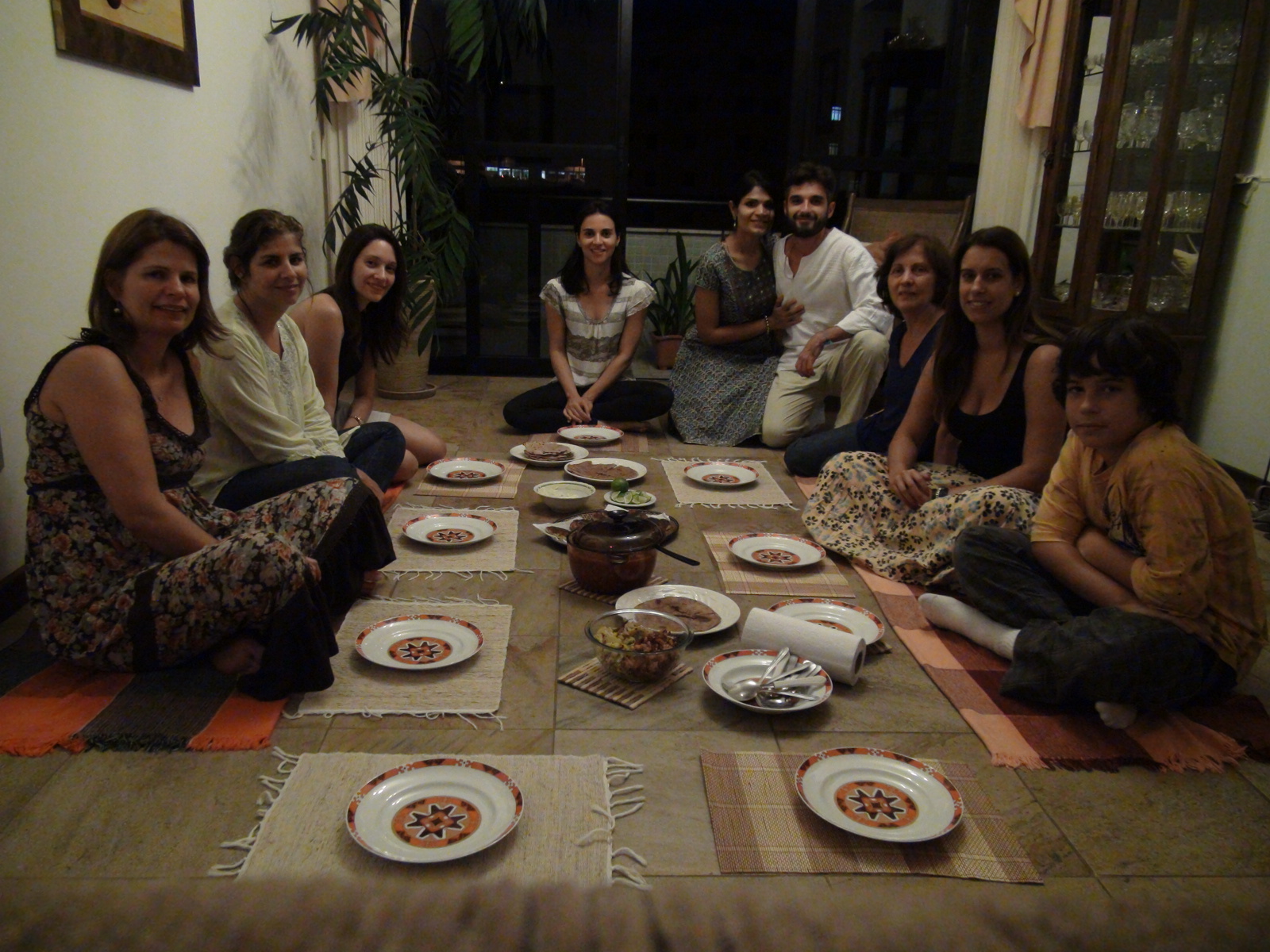
After the cooking session, an Indian
dinning area was arranged!  Lovely!

Jeenal and Daniel with the Brazilian participants,
ready to have the Indian food!

Daniel explaining the participants
the secrets of Indian dining!

The workshop was filled with fun...Jeenal not yet knowing fluent Portuguese would  communicate with the  Brazilian participants in her broken Portuguese bringing in humor and surprise for everybody. But thanks to Daniel that he was always there for translation when needed! 


The delicious Indian dishes taught were Channa Masala (Chick pea curry), Roti and Paratha (Indian bread), Aloo Ghobi (cauliflower with potato curry), Baingan Bharta (burnt brinjal with indian spices), Chaas (refreshing Indian drink made from yoghurt) and Hara Bhara Kebab (Kebab made from peas, potatoes, mint and other spices).

Namaskar,
WLYA Team :-)

"Jeenal Mehta is an inspiring Indian Yoga teacher who also conducts varieties of workshop to inspire vegetarianism amongst the people. She is the director of Wise Living Yoga Academy."

Wise Living Yoga Academy conducts Yoga Teacher Training Courses (240 hours) following the Methodology & Didactics of The Yoga Institute of Santacruz. The course is recognized by The International Board of Yoga - India and accredited by Yoga Alliance - USA (RYS-200 Level).